



When an RBT Leaves Without Notice
What Parents Need to Know
Registered Behavior Technicians (RBTs) play a vital role in delivering Applied Behavior Analysis (ABA) services, and their consistency is important for a child’s progress. Ideally, RBTs provide advance notice when leaving a position so that services can transition smoothly. However, there are situations in which an RBT may resign with little or no notice.
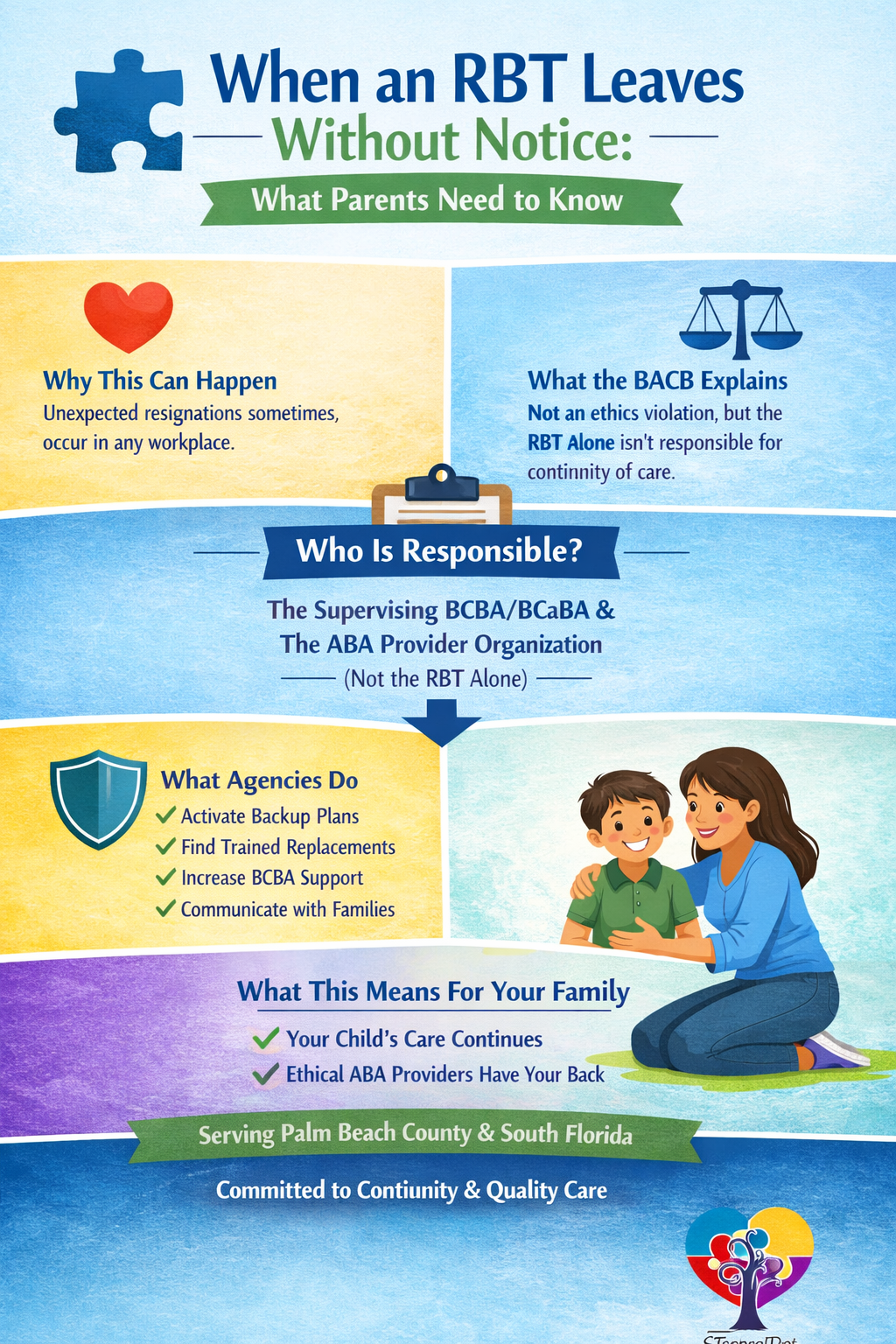
According to guidance from the Behavior Analyst Certification Board (BACB), when an RBT leaves abruptly, it can understandably be disruptive for families and clients. While this is considered unprofessional and may violate an employment contract, it does not automatically constitute an ethics violation under the BACB Ethics Code.
Importantly, the BACB clarifies that the responsibility for continuity of services does not rest with the RBT. Instead, continuity of care is the responsibility of the supervising BCBA or BCaBA and the provider organization. For this reason, it is not appropriate to report an RBT to the BACB solely because they resigned without notice—even if sessions were missed as a result.
That said, this guidance does not suggest that RBTs should feel free to resign abruptly. RBTs are essential to a child’s progress, and sudden disruptions can negatively affect treatment outcomes. The BACB strongly encourages RBTs to follow their employment contracts and provide ample notice whenever possible. To support ethical transitions, the BACB has published resources such as Continuity of Services: Reminders for RBTs and a Continuity of Services Toolkit to help organizations manage these situations responsibly.
From a parent perspective, it is important to know that staffing changes are sometimes unavoidable, even with strong hiring, training, and retention practices. While an agency cannot always control an employee’s decision to resign without notice, reputable providers have established contingency plans in place. These may include temporary coverage, reassignment of staff, increased BCBA involvement, and prompt communication with families to minimize disruption and protect the integrity of services.
At the end of the day, ethical ABA providers remain committed to maintaining services, supporting families, and ensuring that each child continues to receive clinically appropriate care—even during unexpected staffing changes.